Scale without chaos: what it really takes to execute multi-family millwork at volume.
There’s a certain kind of job that looks great on paper and turns into a nightmare in the yard.
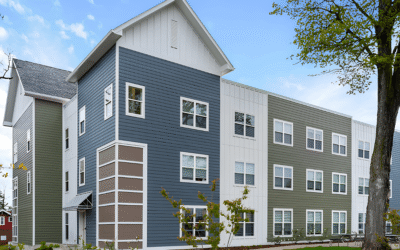
A multi-family project comes in: apartments, student housing, senior living, a mixed-use development. Then the complexity hits. Hundreds of doors across multiple floors, different unit configurations, and tight installation windows all fall apart fast if product arrives unlabeled or out of sequence. Nobody on that jobsite has time to sort through a pile of unmarked millwork.
Dealers who haven’t done this before often find out the hard way that multi-family millwork isn’t just a bigger version of a residential job. It’s a different kind of work entirely. And the ones who figure that out and build their operation around it tend to own that business for a long time.
Why Multi-Family Millwork is Worth the Operational Investment
The multi-family market isn’t slowing down. These projects are happening across every region, and they represent significant volume for dealers who can handle them.
The catch is that developers, general contractors, and project managers on these jobs are not forgiving of disorganization. They’re running tight schedules across multiple trades. They don’t have time to manage their suppliers’ logistics problems.
If your millwork shows up wrong, unlabeled, or out of sequence, you’re potentially holding up a crew and will be pulled from the approved vendor list. Winning this business consistently comes down to one thing: proving you can execute at scale without creating problems on the jobsite.
What Separates High-Performing Millwork Suppliers on Multi-Family Jobs
 Here’s what most dealers underestimate about multi-family millwork: the competitive advantage isn’t just in what you stock. It’s in how you process, package, and deliver it.
A door is a door. What separates suppliers at this level is the work that happens between the order and the jobsite: the labeling, the sequencing, the palletizing, the quality checks.
When a GC is coordinating deliveries across multiple floors of an occupied or partially occupied building, they need product organized by unit and floor, wrapped and protected, ready to go directly to where it’s needed with minimal handling.
That level of organization isn’t an added service. It’s the baseline expectation on a well-run multi-family job. And it’s where a lot of suppliers fall short.
Doors need to arrive pre-hung, labeled by unit and floor, palletized, and wrapped so they come off the truck damage-free. Deliveries need to be sequenced to match the construction schedule, not shipping convenience. Those are the operational details that determine whether a GC calls you for the next project or quietly moves on.
How Proper Millwork Packaging and Labeling Reduces Jobsite Downtime
There’s a reason experienced project managers care so much about how product is packaged and labeled. Every time someone has to sort, identify, or rehandle a door before it gets installed, it costs money. On a 200-unit apartment building, that math adds up fast.
If the millwork arrives organized and ready, the installation crew goes straight to work. If it arrives in bulk with no labeling system, someone has to spend hours sorting before a single door gets hung. That delay doesn’t just affect the millwork schedule. It can push back every trade that follows.
Dealers who understand this sell the efficiency, not just the product. They walk into a conversation with a GC or developer and talk about how their process keeps the installation crew productive. That’s a different conversation than price per unit, and it’s one fewer suppliers can have.
What Types of Multi-Family Projects Should Millwork Dealers Be Targeting?
Multi-family millwork covers more ground than many dealers initially think. The obvious categories are apartment complexes and student housing, but the same operational capabilities apply to senior living communities, townhome developments, and mixed-use buildings where residential units sit above retail or commercial space.
Each project type has its own considerations. Student housing moves fast and runs on academic calendars. Senior living has specific accessibility and hardware requirements. Mixed-use projects often involve coordination with multiple GCs across different portions of the same building.
Dealers who get comfortable across these categories and understand the scheduling pressures, the access constraints, and the documentation requirements become hard to replace. They’re not just a supplier. They’re part of how the project gets done.
The Operational Capabilities Dealers Need to Win Multi-Family Millwork Business
The infrastructure that matters most isn’t square footage or inventory depth; it’s process. As a BPI dealer, you can tell your customers that their doors will be received, broken down, pre-finished as needed, labeled by unit and floor, palletized correctly, and shipped in a sequence that matches the construction schedule reliably, job after job, even when volume spikes.
That kind of execution is what keeps GCs and developers coming back. They don’t want to retrain suppliers. When they find one that runs a clean operation, they stick with them.
Start Winning Multi-Family Millwork Conversations with GCs and Developers
If you’re looking to grow your presence in multi-family millwork, the first step isn’t marketing. It’s a clear-eyed look at your own process. Where are the gaps? What would it take to deliver a 150-unit job with the same confidence as a 15-unit job?
From there, the conversation with developers and GCs becomes much easier. They want to know you understand their schedule, their constraints, and what happens when something goes wrong. They want a supplier who’s already thought through the problems they’re trying to avoid.
That’s the conversation that wins multi-family business. If you’re ready to start having it, talk to your BPI representative about what’s possible for your next multi-family project.
FAQs
Q: Why is labeling and sequencing so important on multi-family millwork deliveries?
A: On multi-family projects, doors need to arrive pre-hung, labeled by unit and floor, palletized, and wrapped for damage-free delivery. When product arrives unlabeled or out of sequence, installation crews have to spend hours sorting before a single door gets hung — delaying not just the millwork schedule but every trade that follows.
Q: What types of multi-family projects require specialized millwork supply capabilities?
A: Multi-family millwork covers apartment complexes, student housing, senior living communities, townhome developments, and mixed-use buildings. Each project type has its own considerations — student housing runs on academic calendars, senior living involves specific accessibility and hardware requirements, and mixed-use projects often require coordination with multiple GCs across different portions of the same building.
Q: What does a building supply dealer need to execute multi-family millwork at scale?
A: The operational capabilities that matter most are process-driven: receiving, breaking down, pre-finishing as needed, labeling by unit and floor, palletizing correctly, and delivering in a sequence that matches the construction schedule — consistently, even when volume spikes. Dealers who can execute at that level become difficult for GCs and developers to replace.